
By David Pham
Dec 7, 2025
Video by National Geographic | Pilots, scientists, and whistleblowers detail UAP encounters and secrecy, prompting Congress to investigate what might be flying in our skies and oceans.
✈️ A Question in the Sky
Part of why UFOs captivate people is simple: we don’t know what they are. Not the Hollywood versions with swarming invasions, tidy radio messages from the stars, or one lost visitor waiting to be rescued. What appears on actual military sensors is stranger and more puzzling.
The 2004 Nimitz encounter illustrated the strangeness of these objects. Radar tracked one at 80,000 feet before it dropped to sea level in seconds. Navy aviator Chad Underwood locked onto it with his FLIR camera and saw no wings, no exhaust, no heat signature. The object shifted altitude and speed so abruptly that radar struggled to follow it, then shot out of view. Underwood could only say, “What just happened?”
Two other declassified Navy videos, Gimbal and GoFast, showed objects rotating against the wind, skimming the ocean, and accelerating without visible propulsion. Pilots watching the displays sounded just as stunned. “Look at that thing,” one said. “It’s rotating.”
When the Pentagon later confirmed the videos as authentic and still unexplained, it marked a quiet shift. It did not confirm extraterrestrials. It confirmed uncertainty. And it opened the door to a wider sense of possibility.
🛸 The Linguistic Detour Around Stigma
Inside the Pentagon, the word UFO became too loaded to use. It carried decades of jokes and assumptions that made serious reporting difficult. Pilots worried it would hurt their careers. Analysts worried it would undermine their credibility.
So the terminology changed. UAP, Unidentified Aerial Phenomena, appeared in internal documents and later in official reporting guidelines. It sounded neutral enough for careful study. Eventually, it expanded to Unidentified Anomalous Phenomena, a way to include objects underwater, in orbit, or crossing between domains.
The point was not rebranding for its own sake. It was about making the subject discussable again, allowing unusual encounters to be documented without cultural baggage shaping the response.
📰 When the Reporting Changed Everything
The modern turning point came in 2017, when New York Times journalists Leslie Kean, Ralph Blumenthal, and Helene Cooper broke the story of AATIP, a quiet Pentagon program studying UAP encounters. They learned of it through former Defense officials Luis Elizondo and Chris Mellon, who arranged for Kean to access declassified Navy videos.
The Tic Tac footage, along with Gimbal and GoFast, became central to their reporting. The team spent months confirming documents, verifying pilot accounts, and establishing that the Pentagon had been collecting and analyzing UAP incidents for years. Nothing in the story claimed extraterrestrial involvement. Instead, it showed that trained observers had encountered real, physical objects that defied easy classification.
When the article went online, it became one of the most-viewed stories in the paper’s history. Suddenly, UAPs were not fringe curiosities. They were data points, captured on some of the most advanced sensors in the world.
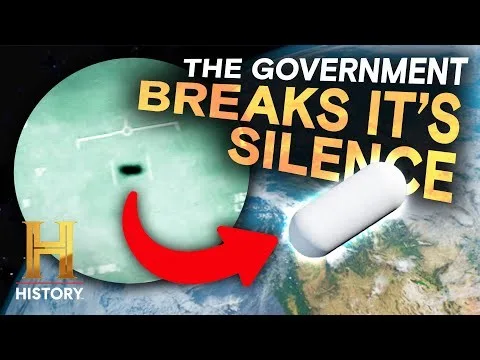
Video by HISTORY | Pentagon whistleblowers, Navy UAP videos, Bob Lazar’s Area 51 claims, and the 2021 UAP report fuel allegations of crash-retrieval programs, Majestic-12 oversight, and alien technology.
🎙️ Whistleblowers and the Pull of the Extraordinary
The narrative widened again when intelligence officer David Grusch said he had spoken to dozens of insiders who claimed the government maintained long-running crash-retrieval programs involving nonhuman craft and biologics. He said he had seen documents and photographs but could not share them publicly. The Intelligence Community Inspector General deemed his complaint “credible and urgent.”
Other insiders, including former Army officer Karl Nell, supported parts of his account. Scientists responded cautiously, reminding audiences that testimony is not the same as evidence. Reporters noted that Grusch had no firsthand access to the objects he described. Even so, his calm delivery and specific claims made lawmakers listen.
This is where the UAP story lives now, in the space between belief and skepticism. It asks us not to leap to the first explanation, and not to shut the door too quickly either. It invites an open but grounded posture toward the unknown.
🏛️ The Hearings That Shifted the Debate
The first modern congressional UAP hearing in 2023 broke a decades-long silence. Navy pilots described objects with no clear propulsion and movement patterns that did not match anything they had trained for. Lawmakers heard about multi-sensor confirmation, near-miss incidents, and reporting systems that had once discouraged pilots from coming forward. For the first time since the Cold War, Congress treated the unexplained as a national security concern.
A second hearing in 2025 widened the frame. Veterans described encounters that stayed with them years later. Journalists presented internal records revealing gaps between public statements and private documentation. Lawmakers reviewed new sensor footage and pressed the Pentagon for clearer answers. Meanwhile, a 2021 UAP Task Force report had already acknowledged that 143 of 144 reviewed cases remained unexplained. Some incidents, the report noted, might require “additional scientific knowledge” to understand.
Together, the hearings made one thing clear: UAPs were no longer eccentric anecdotes. They were an oversight issue demanding transparency, accountability, and ongoing inquiry.
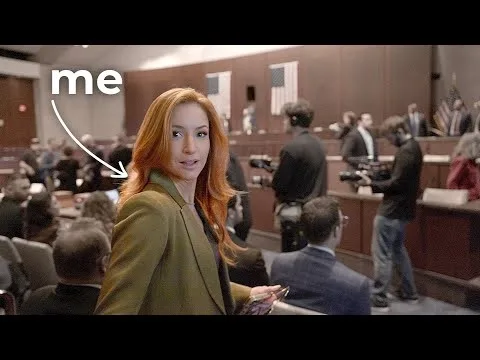
Video by The Endless Void with Kristin Fisher | A packed UFO hearing in September 2025 features compelling military whistleblowers, leaked videos, Russian files, and lawmakers demanding transparency, subpoenas, and real action on UAP disclosure.
📚 We’ve Been Here Before
The intensity of today’s debate echoes earlier decades. In the late 1940s and 1950s, pilots also saw objects darting through American skies. The Air Force responded with Project Sign, Project Grudge, and Project Blue Book, which collected thousands of reports. Most were explained. Some were not. Civilian investigator Donald Keyhoe pressed for honesty about the unresolved cases, arguing that the public deserved a complete picture.
Blue Book eventually shut down, declaring the remaining unknowns insignificant. But the records themselves told a more nuanced story, and cultural flashpoints like Bob Lazar’s Area 51 claims showed how persistent the belief in hidden technology had become.
The mystery stayed right where it was, waiting for clearer data, better tools, and a more open world to catch up to it.
📡 The Witnesses Who Never Forgot
Behind the headlines are people whose experiences lingered. Navy pilot Ryan Graves described objects that hovered motionless at altitude before accelerating abruptly. He testified that UAP are present in U.S. airspace but “grossly underreported,” calling the sightings neither rare nor isolated but routine. When pressed further, he estimated that only about 5% of encounters are ever reported.
At Vandenberg Air Force Base, security officers in 2003 reported a massive rectangular craft drifting in from the ocean, hovering silently over a launch site, then shooting away with startling speed. One officer said he could still hear the fear in the radio calls. Another recalled a debriefing that tried to reframe the event as an unauthorized aircraft landing, even though nothing had landed and no known aircraft matched their descriptions.
Their stories do not demand belief. They ask not to be dismissed.
♾️ The Invitation Inside the Mystery
No single video, testimony, or declassified file confirms extraterrestrial origin. But the evidence suggests our skies and oceans contain much more than we currently understand. Objects tracked on advanced sensors routinely perform maneuvers that challenge known physics. Government assessments note that some incidents exceed existing models of aerodynamics and sensor interpretation, hinting at limits in today’s scientific framework. Pilots continue to encounter things they cannot categorize.
The UAP era does not ask us to choose belief or denial. It asks for a wider space between the two. It invites us to take unconventional observations seriously and to consider that trained witnesses may be describing something real even when they cannot explain it.
The most honest response now is openness, and a willingness to consider that the world above us and the waters below us may be stranger and richer than we assumed. It is an intriguing moment to follow this mystery and see where it leads.

Video by WatchMojo.com | Summarizes 10 striking claims: nuclear-base UAP encounters, decades-long crash-retrieval efforts, non-human craft and bodies, biological effects, disinformation campaigns, religious stigma, and spacetime-bending propulsion — from the latest UAP documentary “Age of Disclosure,” streaming on Amazon Prime