Dec 10, 2025
More than two million immigrants may soon find themselves stripped of legal status as the Trump administration moves forward with sweeping changes that could redefine who belongs in the United States.
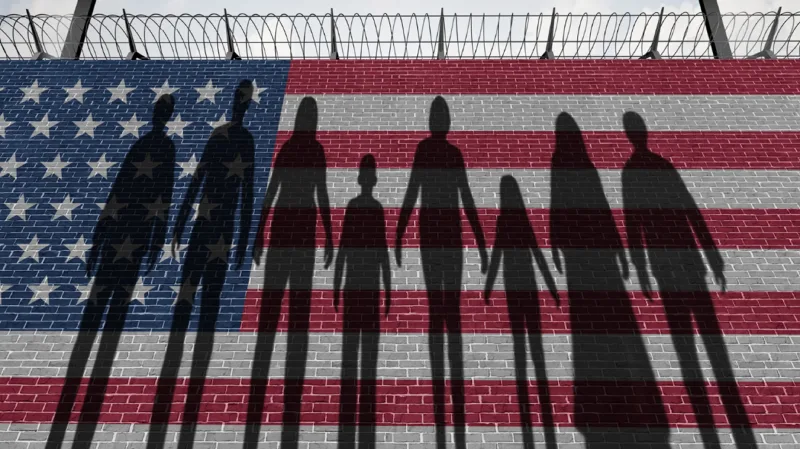
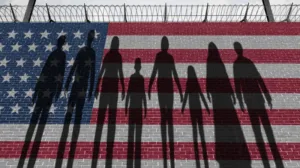
Image via Canva.
More than two million immigrants may soon find themselves stripped of legal status as the Trump administration moves forward with sweeping changes that could redefine who belongs in the United States.
That is the warning from immigration experts, advocates and directly affected people who spoke at a December 5 national media briefing held by American Community Media.
One theme emerged repeatedly: The administration appears determined to turn back the clock to an immigration system that favors some nationalities and excludes others.
“We are seeing an intensity that is unprecedented,” said Hiroshi Motomura, co-director of the UCLA Center for Immigration Law and Policy. “There is a strong sense that the administration wants to return to a system similar to the one that existed around 1900, a system that overwhelmingly preferred European immigrants.”
Through executive orders, Department of Homeland Security policy changes and new litigation strategies, the administration is targeting immigrants who have lived legally in the country for years — including Deferred Action for Childhood Arrivals (DACA), Temporary Protected Status (TPS) and humanitarian parole recipients.
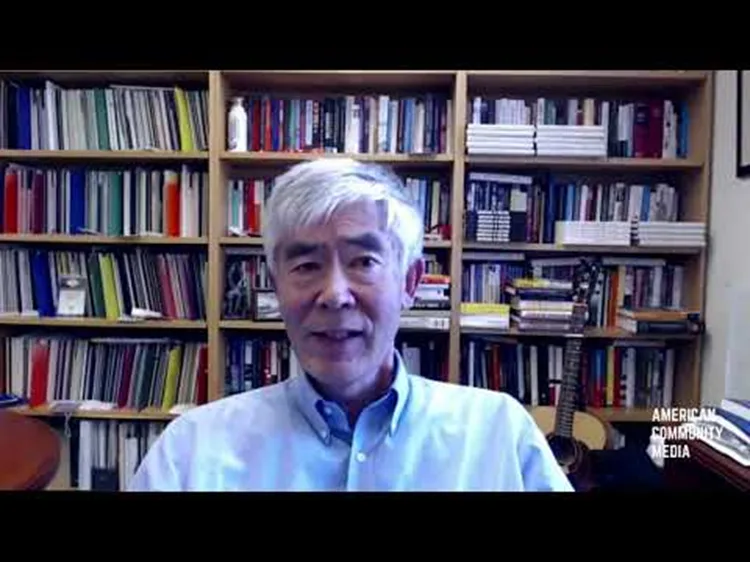
Hiroshi Motomura, co-director, UCLA Center for Immigration Law and Policy, discusses President Trump’s recent suspension of immigration processes for people from 19 countries.
The meaning of “legal” is changing quickly
Motomura explained that the United States recognizes multiple lawful statuses. Some are permanent, such as citizenship and green cards. Others are temporary or renewable — such as DACA, TPS and humanitarian parole — but many individuals in these categories have applied or will apply for long-term status.
“These are lawful statuses, yet they are at the center of the administration’s efforts,” he said. “People have status today and may not have it tomorrow.”
The administration has announced plans to revisit even long-established green cards, especially those granted through asylum or refugee pathways. It is also increasing denaturalization cases, reopening files of people who became citizens years ago and canceling the naturalization ceremonies of people from certain countries deemed high-risk.
Most striking is Executive Order 14160, seeking to end birthright citizenship. Under this order, a child born on U.S. soil would not automatically be a citizen unless at least one parent is a citizen or lawful permanent resident.
“Changing the reading of U.S. citizenship would be by far the most radical thing the Court could do,” Motomura said, after news broke that the Supreme Court had agreed to hear a case to decide if Trump had the constitutional right to limit birthright citizenship.
Even proposing such a change, Motomura added, sends a message that “some people belong and some people do not.”
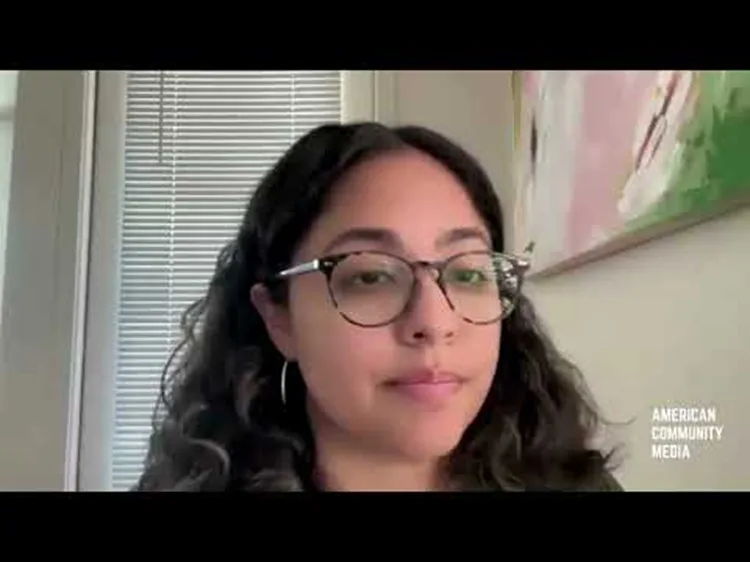
Laura Flores-Perilla, Staff Attorney, Justice Action Center, discusses Trump’s efforts to strip lawfully present immigrants of their status — including those with temporary protected status (TPS) and humanitarian parolees.
Parolees suddenly vulnerable
For people who entered the United States through humanitarian parole, this message has been abrupt.
“The day after the start of Trump’s second term the administration announced plans to end humanitarian parole,” said Laura Flores-Perilla, staff attorney at the Justice Action Center. “This is part of a campaign to take lawful status away from people who followed all the rules.”
She described cases in which parolees attended immigration court hearings expecting routine scheduling updates. Instead, they learned that their cases had been dismissed and they were immediately detained by Immigration and Customs Enforcement. Some were placed into expedited removal, a quick deportation process that offers no standard opportunity to explain one’s case.
“It is unprecedented and cruel,” Flores-Perilla said.
Her team won a temporary court order blocking the practice of expedited removal. She warned, however, that the government is “still looking for other ways” to target the same group.
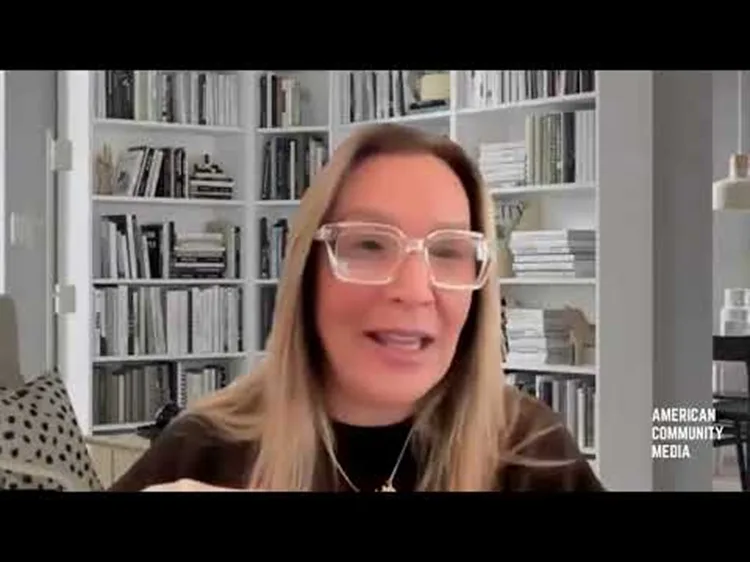
Adelys Ferro, Venezuelan American Caucus, Venezuelan activist, discusses the conditions and treatment experience by immigrant detainees in ICE custody.
Venezuelan families living with constant fear
For Venezuelan families who escaped persecution and economic collapse, the uncertainty is overwhelming.
“What I hear every day is terror, fear, exhaustion and betrayal,” said Adelys Ferro, executive director of the Venezuelan American Caucus. “Families have spent years meeting every requirement. They applied for TPS, got work permits, paid taxes and built small businesses. Now they are being told that six hundred thousand lives could collapse overnight.”
Ferro said Venezuelan WhatsApp groups and community hotlines are filling with the same questions: “‘What will happen to my children if I lose my work permit?’ … ‘Should I stop driving because I am afraid of being pulled over?’ … ‘What will happen to my U.S.-born children if I am detained?’ … ‘Is it safer to move or simply disappear?’”
Venezuela’s lack of a functioning consulate in the United States creates another barrier.
“Even if people want to leave or self-deport, they cannot get passports or IDs,” she said. “It is a complete mess.”
She noted that ongoing TPS litigation may take years. In the meantime, “information is the most important resource we can give people.”
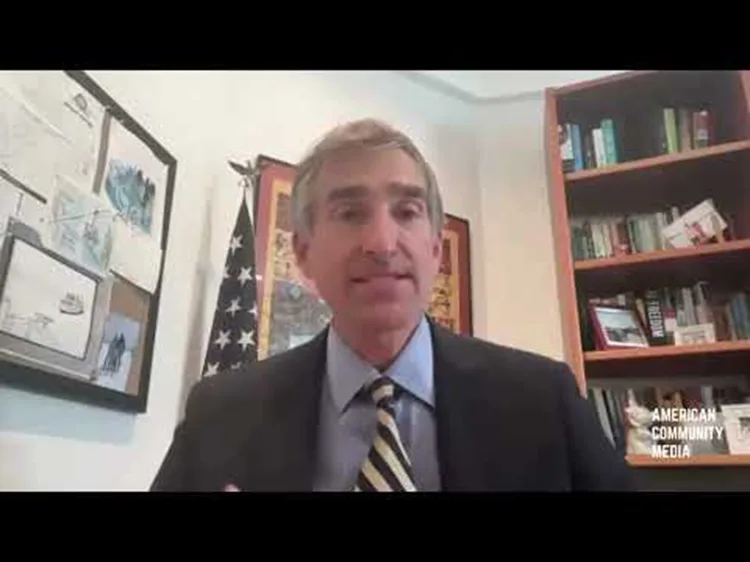
Jeremiah Johnson, former immigration judge in San Francisco and Vice President of the National Association of Immigration Judges, discusses his removal and how the ongoing removal of immigration judges is causing immigrants to lose their legal status.
Immigration court benches are being emptied
Former immigration judge Jeremiah Johnson, recently removed from the bench in San Francisco, described the current moment as an intentional weakening of due process.
“By firing judges, you remove the people who review legal status,” Johnson said. “You turn people who once had legal status into people who are suddenly considered illegal.”
He said entire floors of the immigration court where he worked now sit empty. Dozens of judges have been removed, with only a few replaced.
“It is not difficult to imagine a future where major courts are dismantled entirely,” Johnson said. “People will get their day in court only after they are arrested, often after months in detention.”
He said detention and expedited removal have become tools used to push people to accept deportation. “People are afraid to seek legal pathways or are discouraged from doing so,” he said. “The removal of judges does not bode well.”
Dreamers caught between two worlds
For Andrea, a Dreamer or DACA recipient who arrived to the United States at age five and has spent nearly her entire life in the country, these policy changes affect her daily.
“Policies are not just paper. They shape every part of my day,” she said. She is completing a graduate degree but now has no certainty of legal recognition or employment once she finishes. Her DACA application has been frozen since July 2021, after a federal court ruling to block the processing of new applications.
“We are being told to self-deport to countries we did not grow up in,” she said. “But my whole life is here … When this briefing ends my life does not. The fear does not.”
A system on the edge
Experts and advocates agreed on one point: The United States is witnessing a transformation of the immigration system that goes far beyond temporary policy shifts.
“People who followed every rule are being told they do not belong,” Motomura said. “This is a fundamental reshaping of what legal immigration means in the United States.” Yet, Ferro said about her community, even amid fear and exhaustion, there is determination: “We will stay with our people every step of the way.”Birthright citizenshipDACA